J Dilla: Still Shining

J Dilla: Still Shining

J Dilla: Still Shining

“J.Dilla: Still Shining” from B.Kyle on Vimeo.

via Okayplayer
Here in NYC, J Dilla month really kicked off in a major way this past Friday at the 5th edition of Donuts Are Forever at Santos Party House. Everyone got a chance to spend the night dancing and celebrating the life of J Dilla. Today, on the date of James ‘J Dilla’ Yancey’s birth, we get a closer look at his life, influence, and music by those who knew him best, with J Dilla: Still Shinning. The trailer sparked some conversation topics that are still being discussed, now lets take some time out to see the full project from Brian ‘B. Kyle’ Atkins. BKyle describes this as more of a remembrance piece than a documentary, the vid starts on the day of Dilla’s funeral service (2/10/06) and gives us exclusive interviews with his close friends and family, unseen photos, and rare concert footage. Powerful stuff right here. Gone but never forgotten, Dilla shines on (Rest In Power).
I See The Promised Land, a graphic novel on the life of Martin Luther King Jr.

Arthur Flowers
African American performance poet Arthur Flowers writes about his unusual new graphic novel I See the Promised Land, which recounts the life of Martin Luther King Jr.

Focusing on his experience of creating the book in conjunction with Manu Chitrakar – Patua artist from Bengal, India – he writes that he hopes that this extraordinary cultural fusion will provide, rest for the weary and, that sense of being renewed, refreshed and regenerated in struggle.

Read more

Sundance Highlights:The Black Power Mixtape, Pariah

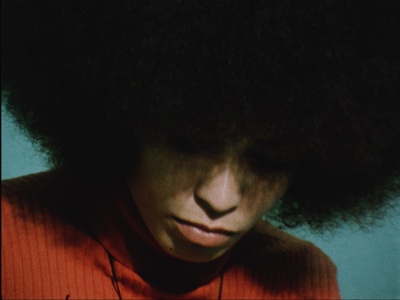
The Black Power Mixtape

The Black Power Mixtape

“But everyone involved with us that we approached for interviews and participation have been so generous and giving including Erykah Badu, Talib Kweli, Harry Belafonte, Kathleen Cleaver, Sonia Sanchez, Bobby Seale and Questlove, who also provided the film with best imaginable music.”

via Filmmaker

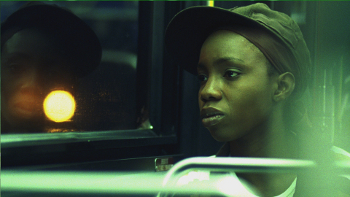
Pariah

Pariah

“The biggest surprise associated with making Pariah came after watching the first rough cut when we discovered that this was not a “black lesbian” movie. We had fought this BRUTAL uphill battle in funding the film with financiers and investors balking at the story because it was “too small and specific” (which is code for “too black and too gay”). After we screened the first cut, one of our early advisors went so far as to describe it as “commercial.” We didn’t know whether to slap them or celebrate.”

Dee Rees