Black History Meditation: Remembering The Presence Of Our Ancestors

“Our nation has need of tears, tears for all those lynched, maimed, whipped, shamed, and debased by our history of race hatred. Our country has need of tears for those who suffered and for those at whose hands they suffered. For they, by denying the humanity of others, denied their own. We remain connected to the past by memory, and the nation, like individuals, must come to terms with the past. There is a way out of the evasion and willed amnesia of our racial trauma — listening to the voices of our ancestors, expressed in story, song, sermon, and texts, offers one such way as a telling of memories, an expression of mourning, and, by means of listening and mourning, to begin the process of healing the wounds, personal and social, inflicted by racism. ”

Albert Raboteau
Author, ‘Slave Religion: The ‘Invisible Institution’ in the Antebellum South’
via HuffingtonPost

The Rise of the Multiracial Church | TheLoop21.com

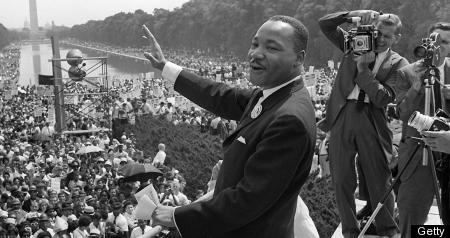
In the not-so distant past, you could count more African Americans at a Republican Party fundraiser than at a non-black church. Martin Luther King Jr. famously remarked in 1963 how the nation split along racial lines on the Sabbath. “11 o’clock Sunday morning is the most segregated hour of the week,” he said. “And the Sunday school is still the most segregated school.”  But in an age where super-sized churches are edging out community churches, that trend is reversing. In recent years, large American churches have gradually grown more diverse.

via TheLoop21.com.

Dr. Martin Luther King, Jr. in His Own Words

Dr. Martin Luther King, Jr

Dr. Martin Luther King, Jr


While Dr. King is primarily remembered as a civil rights leader, he also championed the cause of the poor and organized the Poor People’s Campaign to address issues of economic justice. Dr. King was also a fierce critic of US foreign policy and the Vietnam War. We play his “Beyond Vietnam” speech, which he delivered at New York’s Riverside Church on April 4, 1967, as well as his last speech, “I Have Been to the Mountain Top,” that he gave on April 3, 1968, the night before he was assassinated.
Democracy Now!

In international conflicts, the truth is hard to come by because most nations are deceived about themselves. Rationalizations and the incessant search for scapegoats are the psychological cataracts that blind us to our sins. But the day has passed for superficial patriotism. He who lives with untruth lives in spiritual slavery. Freedom is still the bonus we receive for knowing the truth. “Ye shall know the truth,” says Jesus, “and the truth shall set you free.” – Dr. Martin Luther King, Jr.
The Real News